Salou feeds a few million visitors a year, and the quality of that feeding varies more sharply than anything else in the resort. Two kitchens two minutes apart can sit at opposite ends of the scale, and from the pavement almost nothing gives away which is which.
This note is about telling them apart.
Two towns, a hundred metres apart
Along the busiest part of the front — roughly from the Font Lluminosa out towards the far end of Platja de Llevant — the offer has been standardised. Laminated menus with a photograph of every dish. Boards advertising a full English breakfast until noon. A row of small flags promising that they speak your language. Someone stands at the edge of the terrace working the passing traffic.
Three streets inland, the register changes completely. Menus get short and chalked, in Catalan and Spanish. A weekday set lunch appears at a fixed price, eaten by people in work clothes. Nobody outside is trying to catch your eye.
Both of these are Salou. Two minutes' walk lies between them, which is the single most useful fact in this note.
Why so much of the front is bad
Put plainly: a large share of the seafront restaurants are mediocre, and they charge as though they were not.
No villainy is required to explain it, only arithmetic. A terrace on the promenade in August has several thousand people walking past every evening, nearly all of whom will eat there once and never come back. Repeat custom is not the business model. Rent is high, the season runs five months, and volume wins every argument.
What that produces is predictable. Fish that arrived frozen and pre-portioned. Rice cooked hours earlier and finished under a lamp. Sangria out of a drum. A bill that would have bought a genuinely good lunch four streets back.
None of it is unpleasant, exactly. It is simply not worth what it costs, and after three evenings of it people go home believing the food on this coast is poor. It isn't. They ate in the wrong hundred metres.
The most reliable single warning sign is a photograph of the dish. Kitchens that cook well have no reason to show you a picture of paella; the people ordering it already know what it looks like. Photographs are aimed at somebody who doesn't — which tells you who the place was built for.
How to read a place in thirty seconds
Most of the sorting can be done from the pavement, before anyone has handed you anything.
- Look at the other tables. A room with Catalan or Spanish being spoken at half of them, at nine in the evening, has something going for it.
- Count the languages on the menu. Two is a good sign. Six is a warning.
- Photographs of food: see above.
- Check for a menú del dia — the weekday set lunch, several courses with bread and a drink at one fixed price. Somewhere doing one is cooking for locals as well as for you.
- Note whether anyone is standing outside recruiting customers. Kitchens with a reputation do not need a doorman.
- Read the specials board. If it changes with the day, or with what the boats brought in, someone is paying attention.
Six checks, half a minute, and the odds shift hard in your favour. Exceptions run both ways, but not many.
Five things this coast does properly
Catalan cooking is not Spanish cooking with a different accent, and Tarragona province has dishes that barely travel forty kilometres inland.
| Dish | What arrives | When |
|---|---|---|
| Suquet de peix | Fish and potato stewed into their own thickened broth | All year |
| Romesco | Pounded sauce of dried nyora peppers, almonds and hazelnuts | All year |
| Fideuà | Short noodles cooked in a paella pan with fish stock | All year |
| Calçots | Long sweet onions charred whole, eaten with your hands | Roughly January to March |
| Xató | Escarole salad with salt cod, tuna and anchovy under a nut sauce | Winter |
Suquet means "little juice", and it is the thing to order if you order one thing. Fish and potatoes cooked until the liquid thickens on its own — no cream, no stock cube. It began as a way of using what hadn't sold off the boat, which is why it tastes of fish rather than of a recipe.
Romesco belongs to this province more than anywhere else: small round dried peppers called nyores pounded with toasted almonds and hazelnuts, garlic, bread, oil and vinegar into something between a sauce and a paste. It turns up beside grilled fish, beside anything that has been near a flame. Ask for it if it isn't offered.
Fideuà replaces paella's rice with short, fine noodles that stand on end as they cook, served with allioli, the garlic emulsion. In a resort it is the safer order of the two, for the unglamorous reason that fewer places bother to fake it.
Calçots are a cold-weather ritual: long, sweet onions grown inland, blackened whole over vine cuttings, peeled with your fingers, dipped in a romesco-type sauce and eaten wearing a bib. Weekends, mostly, January to March. Anyone here in the quiet months gets this as compensation for the closed beach bars. Xató is the other winter dish — escarole, salt cod, tuna and anchovy under a sauce close to romesco, from further up the coast but at home this far south.
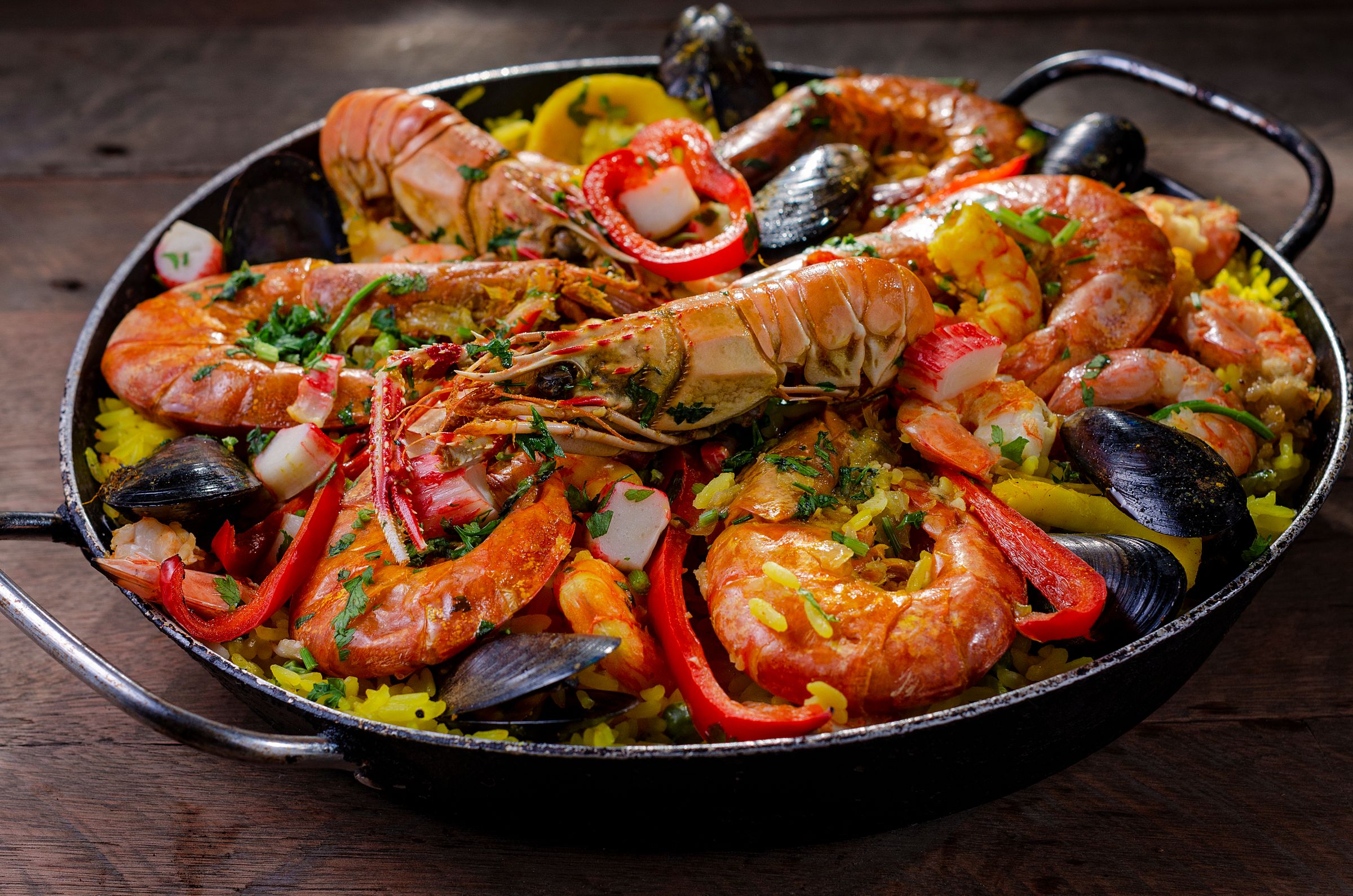
Ordering paella at nine in the evening is the giveaway. Rice is a lunch dish, cooked to order for a whole table, and a pan of it sitting warm at dinner time was not cooked for you.
Nobody here eats at seven
Lunch begins around two and kitchens are still sending plates out at four. Dinner starts at nine, the room fills at ten, and in August it drifts later than that.
Eating at seven does not merely mark you out as a visitor. It decides where you eat. At seven the only kitchens open are the ones that opened early on purpose, for visitors — so the clock steers you into exactly the restaurants this note is warning you about. Arrive at half past nine and the whole town is available, including everywhere dark two hours earlier.
Two days is all the adjustment takes.
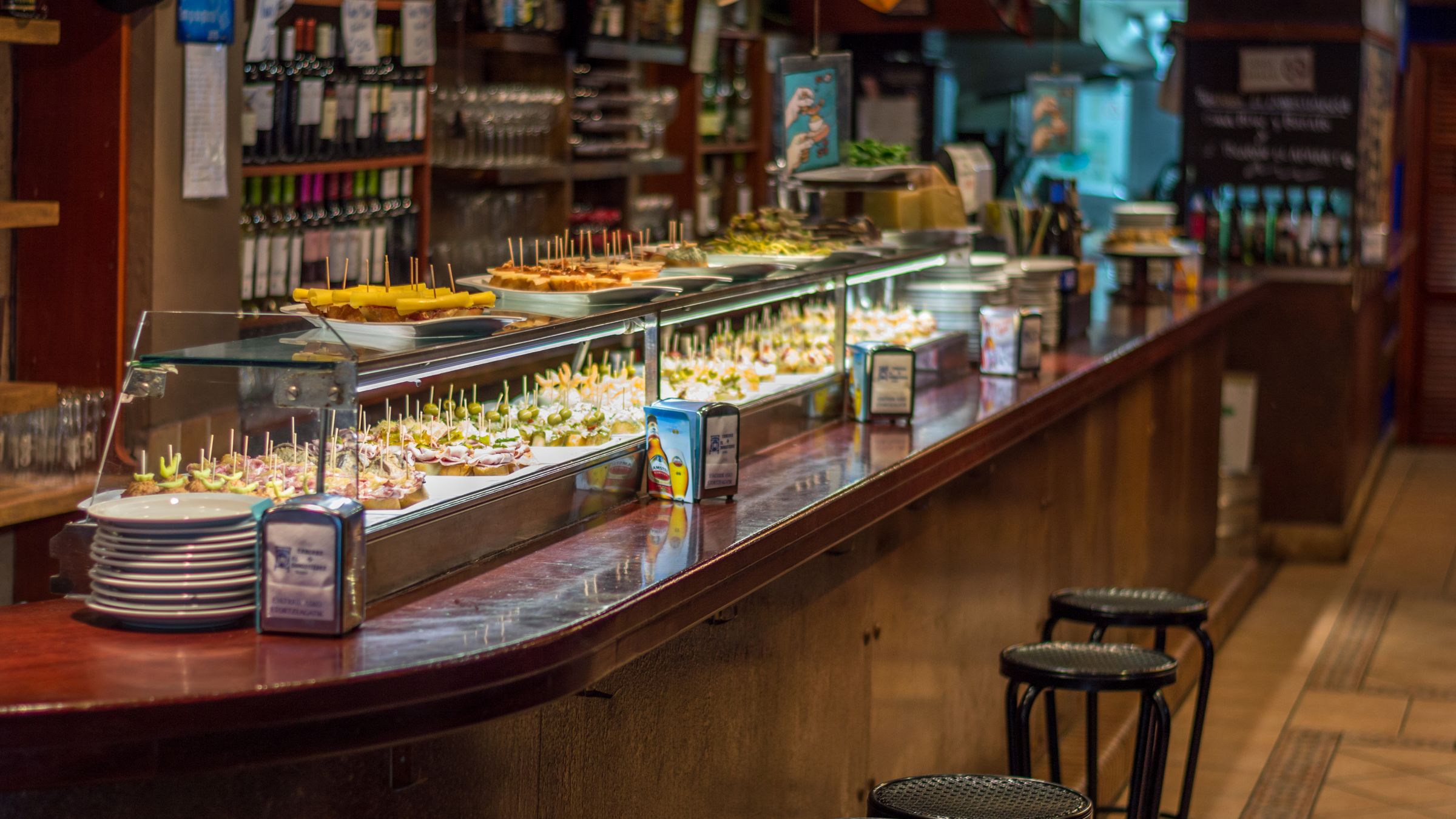
The local shape of the day is a substantial lunch and a lighter, later dinner — not the other way round. Value sits in the weekday menú del dia: several courses, bread and usually a drink, for less than two courses cost on the promenade at night. Eat properly at two, swim it off, and dinner becomes a few plates at a bar counter rather than a production.
Round at the old port
The port end of town is where the eating gets more serious, and it sits about fifteen minutes' walk from the middle of the main beach.
Be clear about what it is now, though. Mostly a leisure harbour — pleasure boats, a couple of excursion craft — rather than a working fleet. Salou's serious fishing happens a few kilometres along the coast at Cambrils, and a good deal of what gets served here was landed there. Fishing-village romance therefore needs handling carefully: the boats you are admiring are somebody's weekend.
What the port has is restaurants facing water instead of a parade of shops, older ownership, and a clientele that includes people who drove down from Reus or Tarragona for lunch. That last group is the signal worth reading.
Or buy it yourself
A great deal of Salou's accommodation comes with a kitchen, and a striking number of people never open a cupboard in it.
A covered municipal market sells fish, meat and vegetables on ordinary morning hours, Monday to Saturday, and is shut long before most holidaymakers think about dinner. An open-air street market takes over part of the town one morning a week; the day is easy to get wrong, and the town hall lists it. Supermarkets cover the rest, and the better-value ones sit inland rather than on the front — the restaurant rule in a different costume.
Self-catering earns its keep in July and August, when the tomatoes are worth eating raw. Bread rubbed with tomato, oil and salt — pa amb tomàquet — plus whatever the fishmonger had that morning, eaten on a balcony at ten at night, beats a great deal of what the promenade sells for the money.
Where the evening goes once the plates are cleared is a separate note. For listings and opening hours, the Salou tourist board and the town hall are dependable; on what you are actually eating, the entries for romesco and fideuà are a reasonable start.