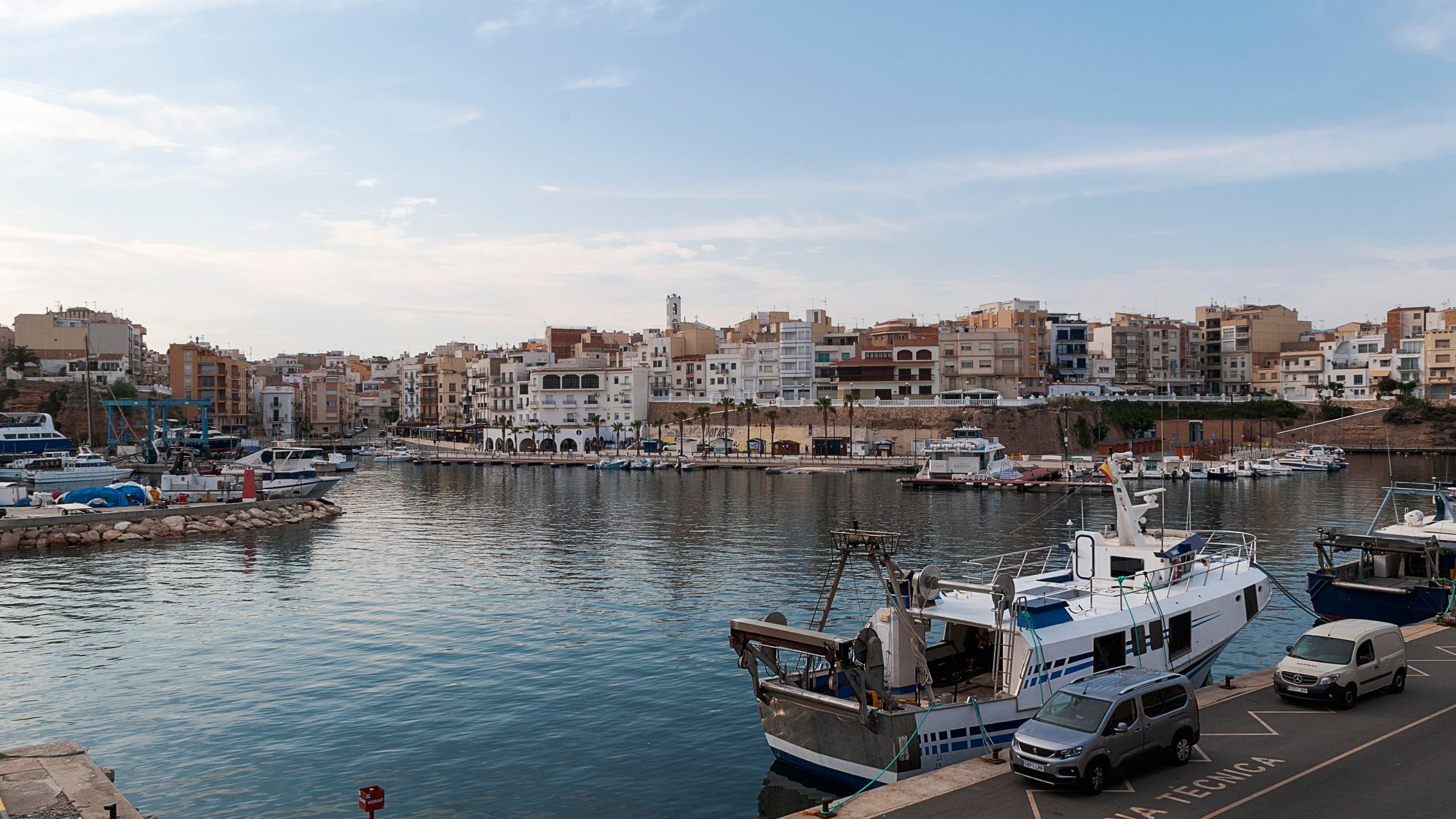
Salou's seafront is not one beach but two, split by a stubby harbour mole, and the split runs deeper than the map suggests.
East of that mole lies Platja de Llevant — a good kilometre of sand behind a palm-lined promenade, and the reason most people book. West of it lies Platja de Ponent, which is where the people who actually live here go. A great many visitors spend a full week in the resort without once walking past the harbour to see it.
West of the mole
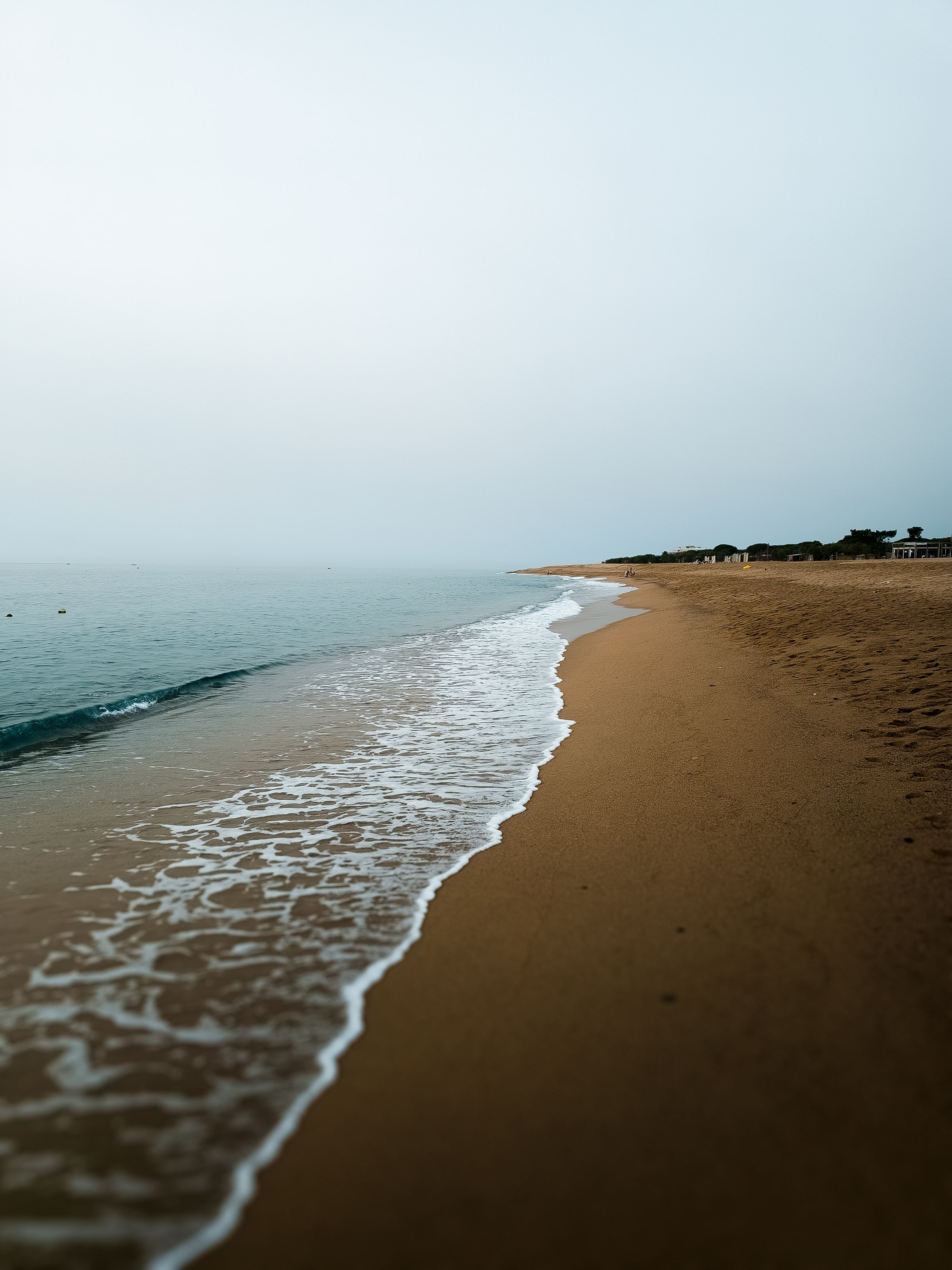
Ponent is a shade under a kilometre of the same coarse gold sand, running from the harbour arm out towards the western edge of town. Water shelves gently here, as it does along this whole stretch of the Costa Daurada — you wade a long way before it reaches your shoulders — and the swimming is no worse than on the fashionable side.
What changes is everything behind the sand. Llevant has a wide, planted promenade with the villas of Passeig Jaume I set back from it and the Font Lluminosa, Carles Buïgas's illuminated fountain, at the far end. Ponent has a sea wall, a plainer walkway and apartment blocks standing much closer in. In two or three places the beach narrows to a few dozen paces between wall and water, and on an August Sunday those pinch points fill first and stay full.
Even the crowd is a different crowd. Morning swimmers who plainly do this every day of the year. Grandparents with folding chairs and a thermos. Long-stay northern Europeans who arrive in October and go home in April, and who treat the beach as a place to walk rather than to lie down on.
How it differs from Llevant
Both beaches are municipal, both are raked and cleaned, and both usually carry a Blue Flag. Past that, the two halves of the front are not doing the same job at all.
| Llevant | Ponent | |
|---|---|---|
| Length | Just over a kilometre | A shade under a kilometre |
| Aspect | South-east; morning sun | South-west; sun until it sets |
| Behind it | Palms, promenade, villas | Sea wall, low blocks, ordinary streets |
| Services | Dense: bars, loungers, kiosks | Thin, and thinner heading west |
| Mostly used by | Week-long package guests | Residents and long-stay visitors |
| August Sunday | Full, loud, cheerful | Busy, but you can put a towel down |
None of which makes Ponent the better beach. Llevant is the handsomer one by a clear distance, and anyone here for six days of sun and noise is right to stay on it. Ponent is for the other kind of afternoon.
The old port, which still works
Sitting between the two beaches is the harbour: a short quay, a slipway, a fuel point, a chandlery, and a car park that is fuller than it looks from the road. A modest fleet of llaüts — the broad-beamed local boats, low in the water and usually painted white and blue — is moored along the inside of the arm. Nets get mended on the concrete. Gulls behave badly.
This is a working corner of a resort, and it is worth ten minutes of anybody's morning. Come at the wrong hour, though, and there is nothing happening at all: the boats are out, the quay is empty, and you are looking at a car park.
Salou existed as a port long before it existed as a resort. Through the eighteenth and nineteenth centuries this was the sea outlet for Reus, shipping wine and aiguardent — grape spirit — out to northern Europe, and the sixteenth-century Torre Vella inland was built because a shore this useful attracted the wrong sort of visitor. Further back still, in September 1229, the fleet that Jaume I of Aragon took to Mallorca sailed from this bay. The town before the hotels is a longer story than the seafront lets on.
In season, small pleasure boats run from the mole down to the coves around the headland and along the coast to Cambrils. They are unhurried, they are not cheap for what they are, and on a flat morning they are the best view of Salou you will get.
Walking west, and how far you get
From the harbour, the whole of Ponent takes about fifteen minutes at an unhurried pace, twenty if you stop. Going west, the front gradually gives up its ambitions:
- the boat-trip kiosks and the slipway at the harbour end
- a run of low blocks with ground-floor bars, thinning as you go
- a play area, some outdoor exercise frames, a scatter of showers
- the last few hundred metres, where the sand widens again and the crowd simply stops
Keep going and the built edge frays out towards Vila-seca and, eventually, Cambrils — roughly seven kilometres along the coast, comfortable on a bicycle and perfectly walkable in a couple of hours, though the route leaves the water in places and is not a promenade the whole way. Most people turn round at the end of the sand, which is the sensible move.
Why the sunsets matter here
Ponent faces roughly south-west. That single fact is the practical argument for the whole side of town: from spring through autumn the sun drops into the sea in front of you rather than behind the hotels. Late June puts sunset at about half past nine; by December it comes not long after half past five, which is its own kind of pleasure — a cold, empty beach and a red horizon at an hour when Llevant is already in shadow.
Afternoons carry a breeze with them. The garbí, the south-westerly that gets up along this coast after lunch, comes onshore here rather than off the land, so Ponent is cooler than Llevant at three o'clock and choppier by five. Swimmers do not much mind. Anyone reading a paperback will spend the afternoon chasing it.
Llevant has the palms, the villas and the fountain. Ponent has the one thing the other side of the mole can never have, which is the sun going down at the end of it.
Where Ponent is simply worse
Honesty first: for long stretches this is not a good-looking beach. The blocks behind it went up quickly in the 1960s and 1970s and were not designed to be admired from the sand. There is no equivalent of the planted promenade on the other side, and the harbour end is functional — concrete, bollards, parked cars — rather than picturesque.
Shade is the real problem. Ponent has very little of it, and what exists is claimed early. Facilities thin out as you go west: fewer kiosks, fewer loungers to rent, fewer places to buy a cold drink without walking back towards the centre. Out of high season, several of them shut entirely.
Two practical consequences. Bring your own shade if you are staying past noon in July or August, because you will not rent it at the western end. And check what is actually open before you commit an afternoon here in April or October — a beach with no bar is a long wait for anyone under ten.
The streets behind the sand
One street back from Ponent, Salou stops performing. The blocks are older and lower, the ground floors hold a bakery, a pharmacy, a hardware shop and a couple of bars where the menu appears in Catalan and Spanish before it appears in English. A weekly street market takes over part of the neighbourhood for a morning. Nobody is handing out flyers.
That matters more than it sounds when you are choosing where to sleep. This side sits far enough from Carrer Carles Buïgas that the night noise arrives as a distant hum rather than an event — worth weighing against the shorter walk to everything, which is what the note on where to stay tries to balance.
The best hour on Ponent is not lunchtime. Walk it at around seven in the evening in June or September: the day crowd has gone up to shower, the fishing boats are back in, the light has turned, and the bars behind the front are filling with people who are not on holiday. Twenty minutes there tells you more about Salou than a full day on the main beach.
Beach flags, water quality and seasonal service information are published by Salou town council and by the local tourist board; boat departures from the mole are seasonal and worth confirming on the day.